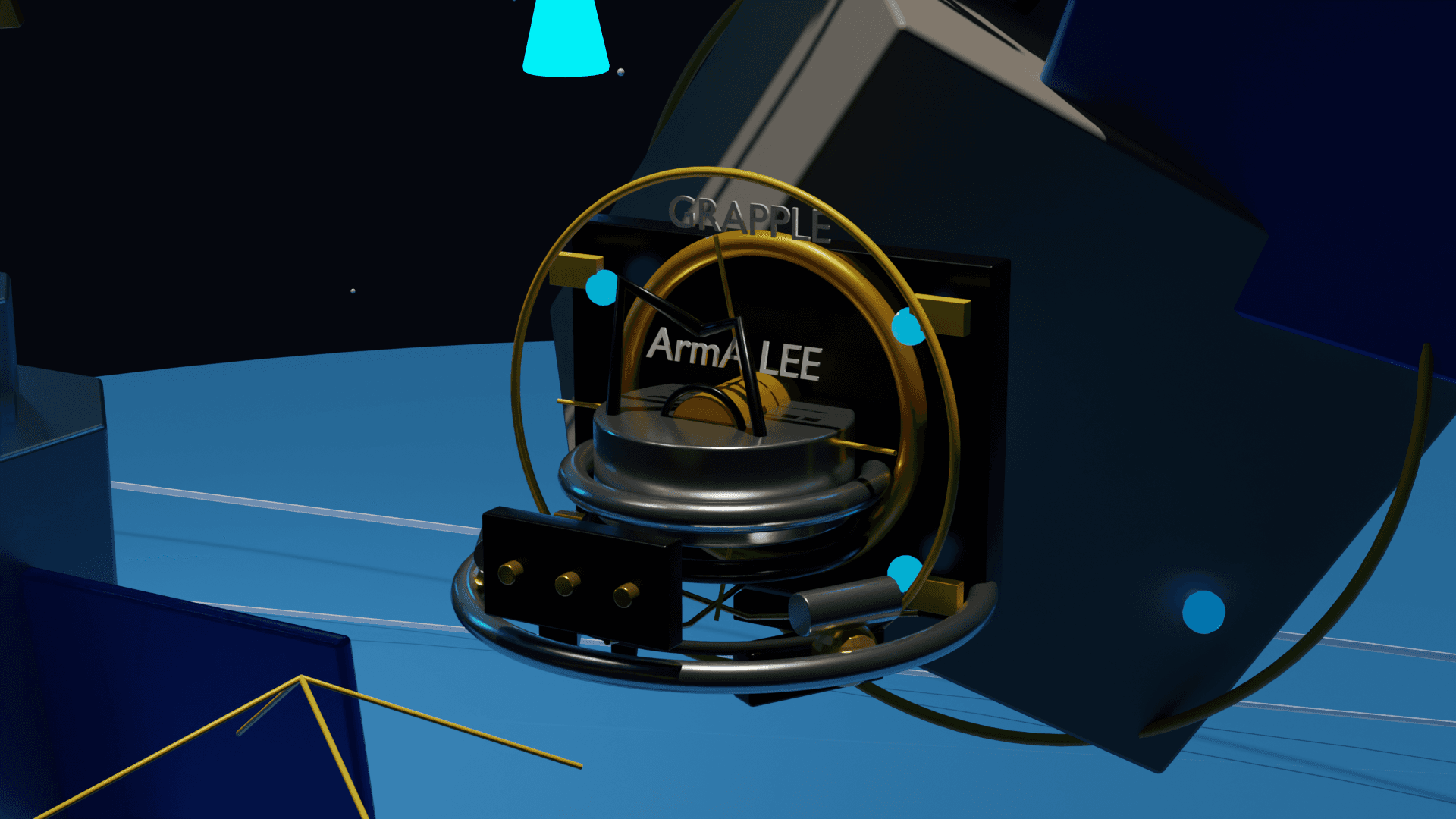
Debris capture interface
Capture
Docking and capture hardware concepts for controlled assembly operations in orbit.
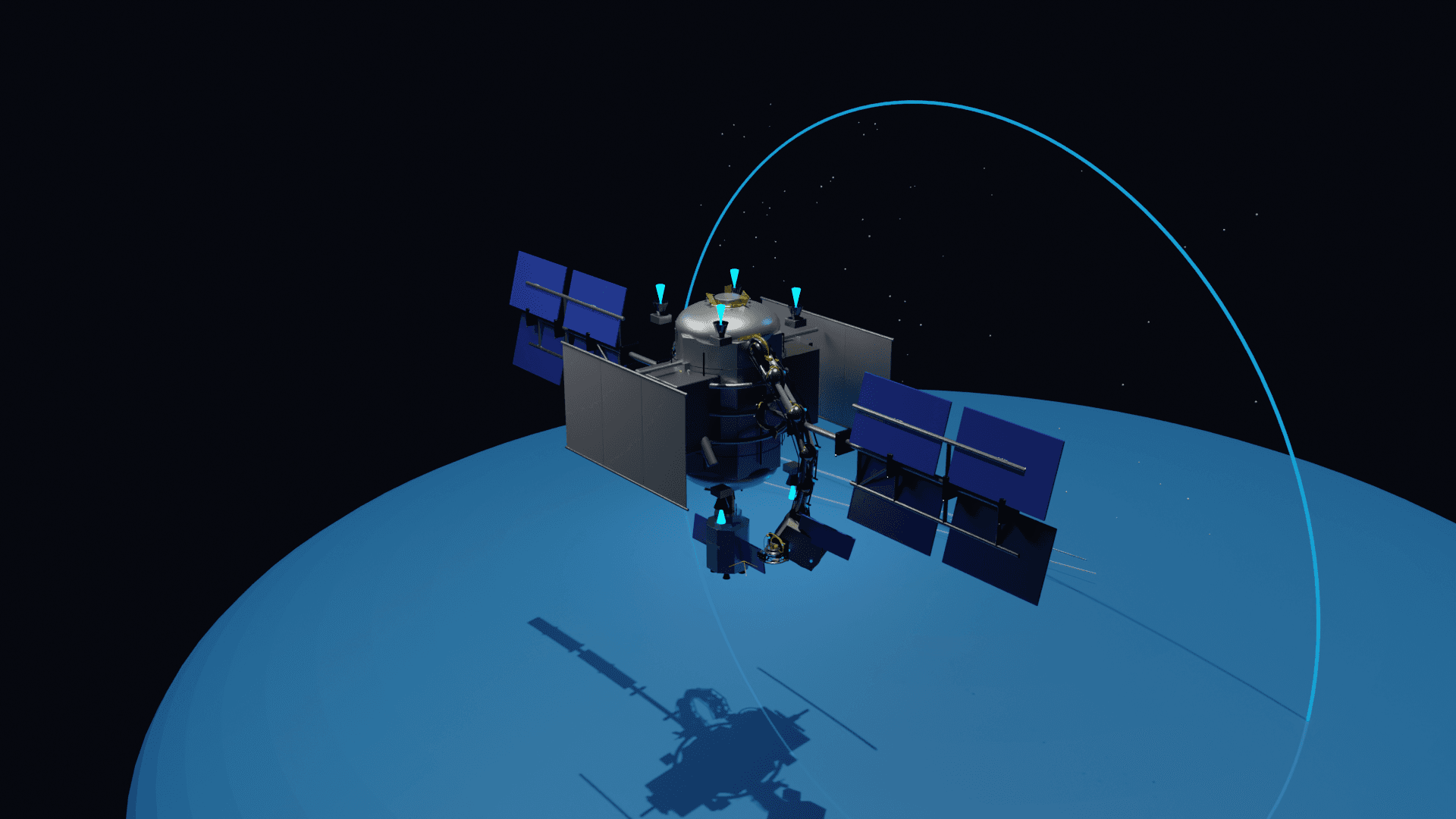
Capturing orbital debris in low Earth orbit and turning it into satellite infrastructure.
We are developing AOAS, a modular spacecraft that captures orbital debris in low Earth orbit, recycles it into feedstock, and prints and assembles satellite structures on demand. FricaSpace is at ground proof-of-concept stage; no flight hardware and no commercial service is available. In-orbit MVP targeted for 2028-2029.
AOAS Platform Concept
FricaSpace is shaping AOAS as a modular orbital factory concept: robotic capture of orbital debris, supervised assembly in low Earth orbit, and materials processing designed to turn orbital infrastructure into something cumulative.
AOAS 2026 concept renders
Concept imagery. FricaSpace is at ground proof-of-concept stage; no flight hardware and no commercial service is available.
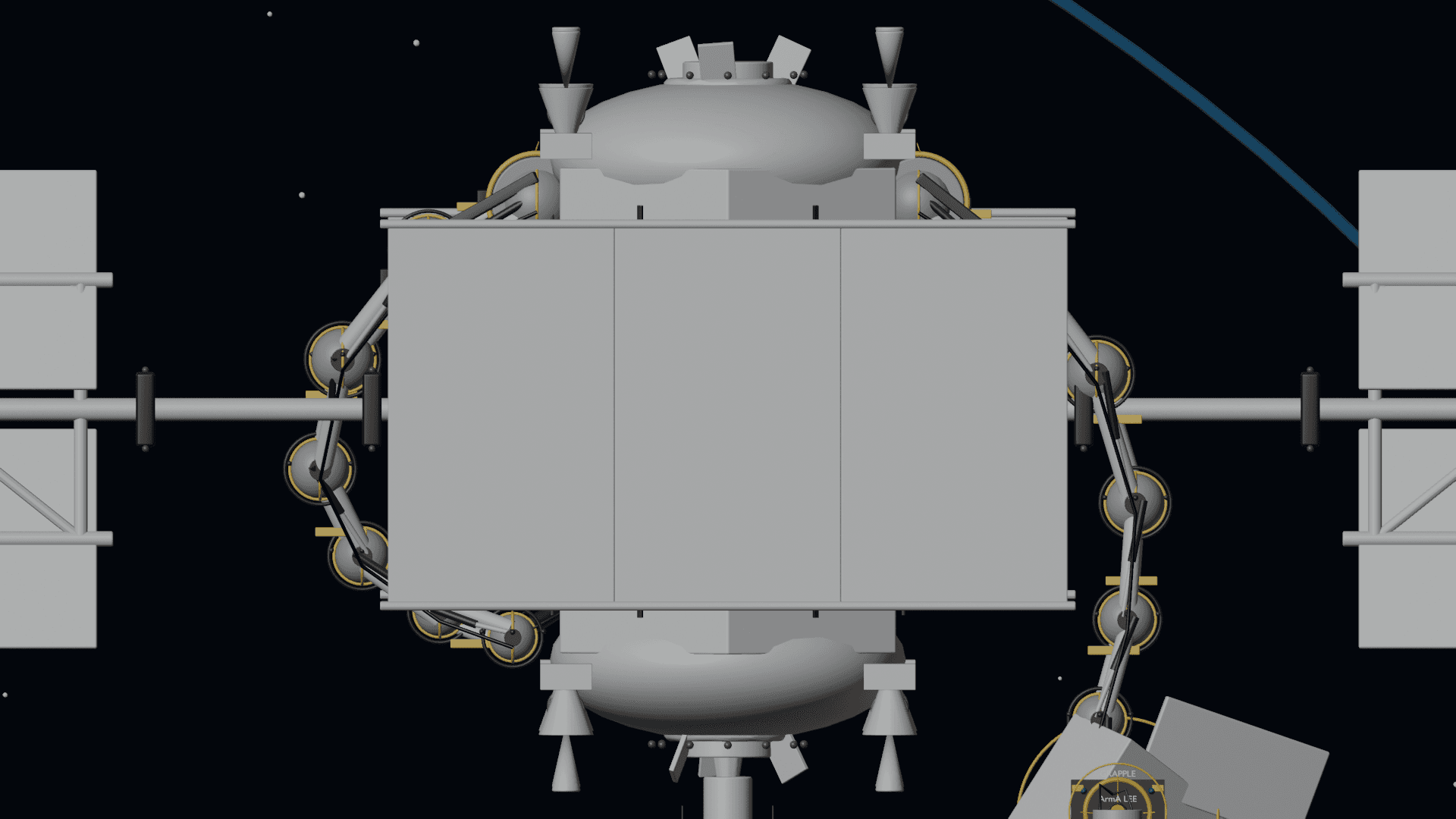
Debris capture interface
Docking and capture hardware concepts for controlled assembly operations in orbit.
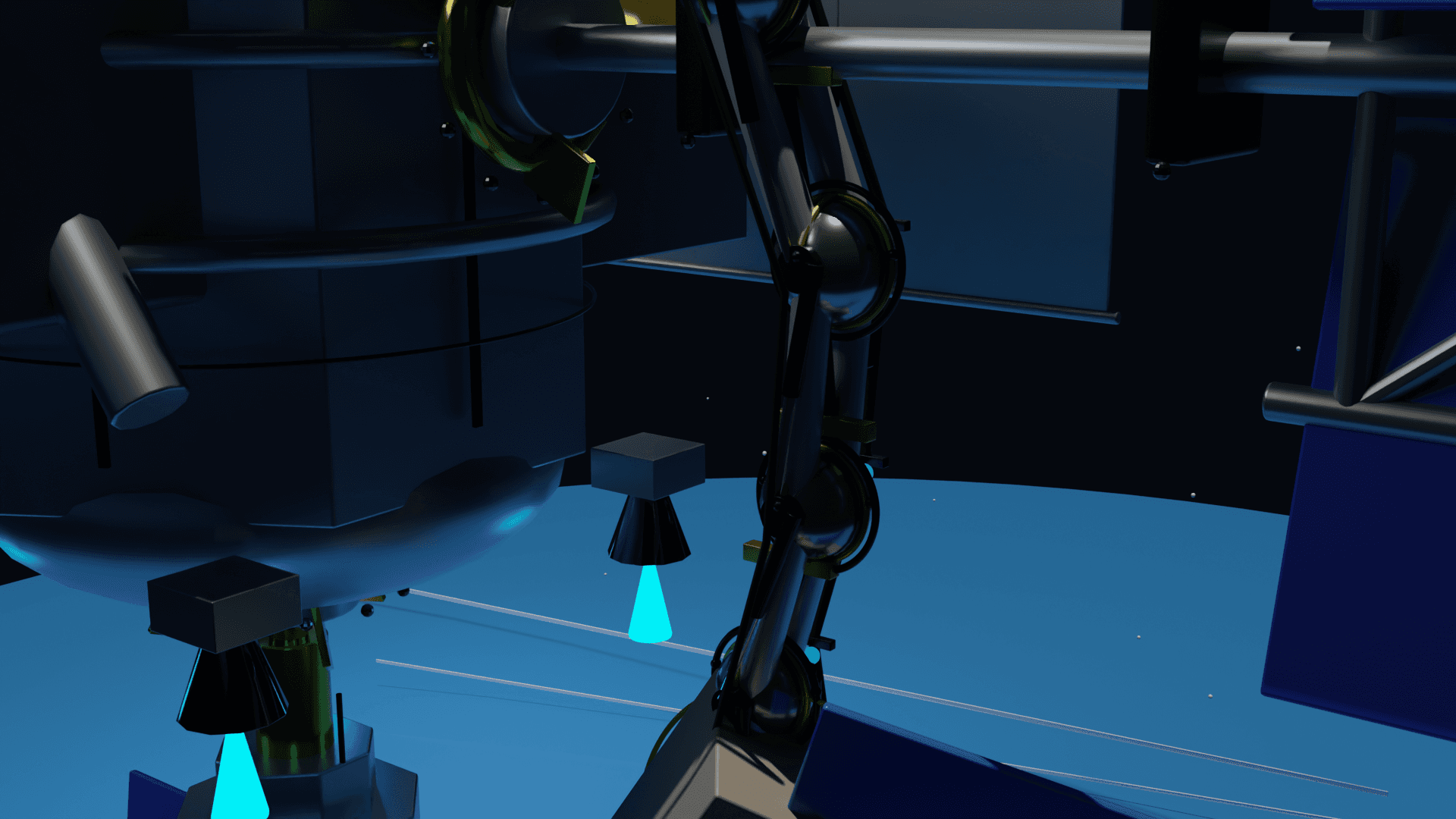
Orbital robotics
Robotic manipulators visualized for supervised, repeatable assembly workflows in low Earth orbit.
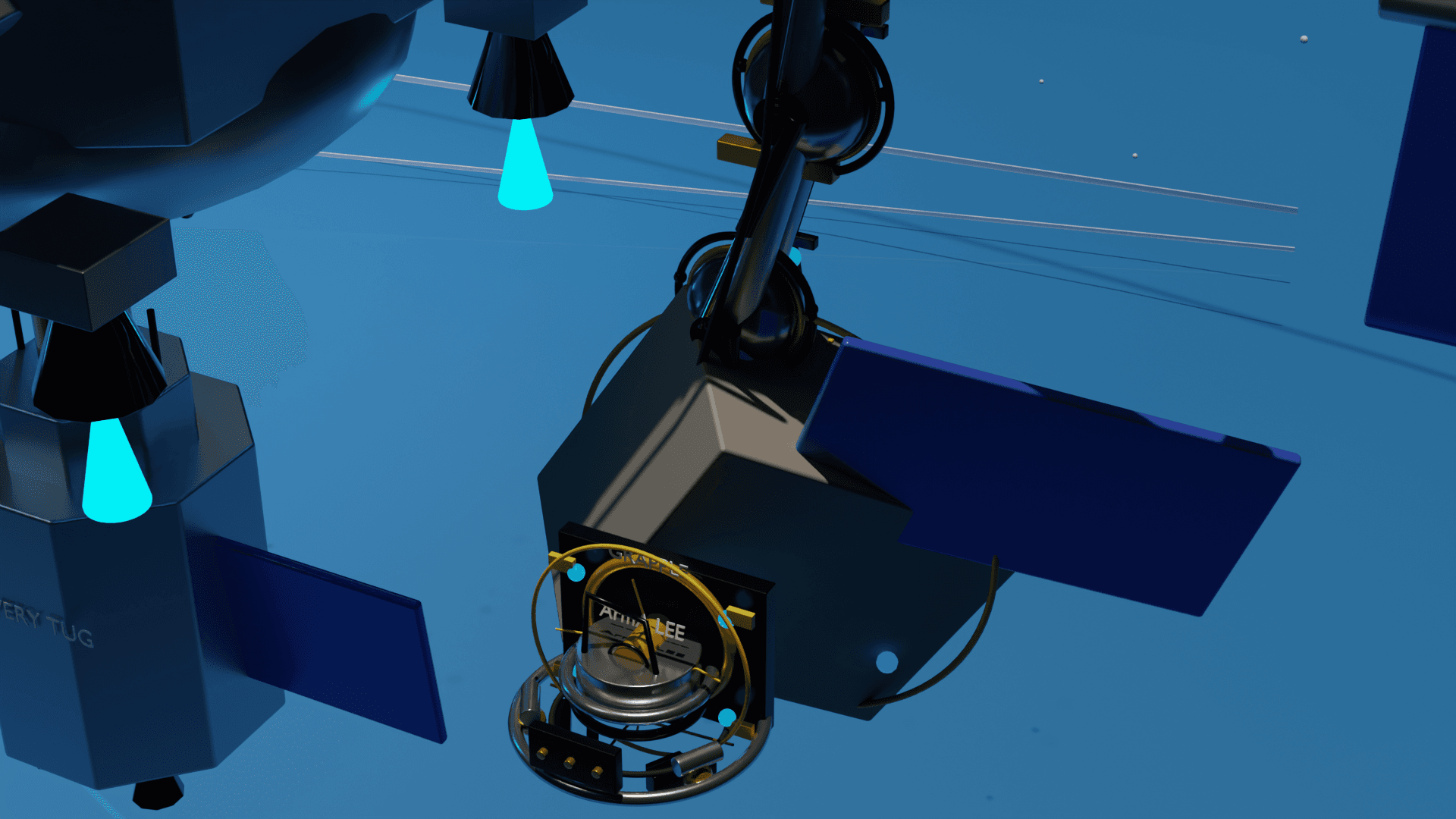
Materials R&D
Laser processing imagery representing future studies on manufacturing from recycled orbital debris.
For sixty years, the same model has dominated: design on Earth, launch into orbit, operate until failure, abandon in place. Every satellite, every structure follows this logic. Nothing is repaired. Nothing is reused. Nothing is built where it actually needs to operate.
Years and hundreds of millions invested in a system used once, then left to drift — or burned on reentry. The launch-exploit-abandon cycle wastes the most expensive assets humanity has ever built.
Over 27,000 tracked objects, millions of untracked fragments — sixty years of abandonment accumulating. The Kessler syndrome, a self-sustaining collision cascade that renders LEO unusable, is no longer theoretical. It is an engineering timeline.
Sub-Saharan Africa communicates through satellites it does not own, navigates through systems it did not build, and monitors its territory through infrastructure it cannot control. No sub-Saharan nation holds sovereign presence in orbit.
We are validating requirements, building simulation prototypes, and aligning with space agencies and industry to plan demonstration missions in low Earth orbit.
We aim to help Africa leapfrog into the orbital economy through in-orbit manufacturing R&D, responsible partnerships, and long-term capability building.
Targeting reduced access barriers through modular, partner-led missions and shared infrastructure.
Exploring in-orbit assembly and debris recycling to lower the cost of deploying satellite infrastructure over time.
Building the foundations for high-tech jobs, research programs, and industrial spillovers across Africa.
Africa does not need to replicate the old model. It has the opportunity to build the right one from the start — and a strategic imperative to do so before the orbital commons becomes a contested resource it has no standing to shape.
No sub-Saharan nation owns its critical orbital infrastructure. Satellite communications, weather systems, navigation, and Earth observation all depend on foreign-held assets — a strategic dependency that grows more consequential every year.
The US, China, EU, Russia, India, and the UAE are competing to establish permanent orbital and lunar presence. This competition is geopolitical, economic, and military. Nations without sovereign orbital capability operate on borrowed infrastructure — and borrowed time.
The Kessler syndrome is not only a threat — it is a market. The ability to capture, process, and reuse orbital debris is a growing necessity. FricaSpace is positioning at the center of this emerging economy before incumbents define the standard.
The old model: launch → exploit → abandon. The new model: launch → assemble → operate → capture and recycle → manufacture and expand. Orbital infrastructure becomes cumulative, self-sustaining, and sovereign. Africa can build this model from the ground up.
A staged pipeline from launch preparation to spacecraft assembly and activation in orbit.
Launch & Deployment
Launch modular components and robotic assets using partner vehicles and validated launch plans.
Manufacturing in Orbit
Execute supervised robotic assembly workflows and validate structural integrity in low Earth orbit.
Mission Activation
Commission assembled satellite assets and transition to operational partners and service delivery.
A concept architecture for debris capture, materials processing, spacecraft assembly, and mission operations in low Earth orbit.
Studying orbital debris and feedstock processing pathways for future in-orbit manufacturing.
Designing modular components for efficient launch and assembly with partner vehicles.
Developing robotic workflows to assemble satellite structures in orbit safely and repeatably.
See the full concept architecture and target capabilities.
Explore TechnologyFricaSpace is at ground proof-of-concept stage; no flight hardware and no commercial service is available. First commercial contract targeted for late 2029. Dates are targets and will shift with partner timelines and funding readiness.
Ground testing of debris capture, feedstock recycling, and additive manufacturing in vacuum chambers, with AOAS mission concepts validated in simulation.
Fly AOAS subsystems on a partner suborbital flight to validate capture and manufacturing steps under launch loads and microgravity.
Place a prototype AOAS spacecraft in low Earth orbit to capture orbital debris and assemble a first structure. First commercial contract targeted for late 2029.
Scale to a constellation of AOAS units serving satellite operators with on-demand assembly, repair, and debris removal in low Earth orbit.
Prioritized segments where in-orbit assembly and debris recycling can unlock new satellite infrastructure and services.
| Market Segment | Indicative TAM | Growth Outlook |
|---|---|---|
| Satellite Communications | USD 31.22B (2023) | CAGR 9.6% to USD 70.89B by 2032 |
| Earth Observation | USD 5.10B (2024) | CAGR 6.2% to USD 7.24B by 2030 |
| Space Tourism & Habitats | USD 888.3M (2023) | CAGR 44.8% to USD 10.09B by 2030 |
| Debris Monitoring & Removal | USD 1.05B (2024) | CAGR 7.8% to USD 2.05B by 2033 |
| In-Orbit Manufacturing | USD 968M (2024) | CAGR 23.2% to USD 5.14B by 2032 |
| Lunar & Deep Space | USD 28.35B (2024) | CAGR 5.1% to USD 44.03B by 2033 |
Indicative global estimates from cited sources; definitions and coverage vary by publisher.
Sources
The foundations of FricaSpace rest on decades of infrastructure, hardware, and domain expertise.
A decade deploying and managing systems across major ISPs and submarine cable operators — building the backbone of Africa's digital connectivity. Orbital networks are distributed infrastructure. So are terrestrial ones.
Co-founded two technology companies — fintech and fleet management — shipping physical products from concept to market. Regulatory navigation, hardware constraints, and operational discipline are already proven.
AIEA-recognized expertise on the founding team — rigorous safety frameworks for fissile materials. As nuclear propulsion and power systems become central to deep-space missions, this is a rare and relevant credential.
Founding team PhD research directly in materials science — the core discipline behind in-orbit feedstock processing, debris recycling, and structural manufacturing. This is not adjacent expertise; it is the target domain.
Hands-on experience in IoT, embedded robotics, and machine learning pipelines — the exact engineering disciplines that underpin autonomous assembly of spacecraft in low Earth orbit. Built and shipped, not just studied.
A lean, execution-focused team spanning materials science, nuclear safety, autonomy, and mission operations.

Founder & CEO
Co-founder in fintech and fleet management. A decade building Africa's connectivity backbone with major ISPs and submarine cable operators. Self-taught in orbital systems and autonomous robotics. His thesis: the bottlenecks that limit a continent are always in the infrastructure layer — and space is the next one.

Statistical & ML Engineer
Builds statistical models and machine learning pipelines to support mission planning and autonomy.

Materials Science Lead
PhD in materials science (entrepreneurship track), founder of DEEZPRO learning platform, and author of Datamacien.

Fissile Materials Safety
AIEA awardee and supervisor in fissile material safety, supporting rigorous risk frameworks.
Dieudonne did not come from a space agency. He came from the networks that connect Africa to the world.
Over a decade, he worked at the infrastructure layer of global connectivity — deploying and managing systems with major ISPs and submarine cable operators, building the hidden backbone that Africa's digital economy depends on. That work gave him something rare: a systems-level understanding of how distributed, high-stakes infrastructure actually gets built, operated, and maintained across continents.
He co-founded two ventures alongside it — a fintech platform and a fleet management application — building both from concept to product, navigating hardware constraints, regulatory environments, and the operational realities of shipping physical systems. His IoT and robotics work deepened his vocabulary in autonomous hardware and embedded systems.
The move to space was not a pivot. It was a conclusion. A decade spent thinking about connectivity, sovereignty, and infrastructure inevitably points upward. Space is the next infrastructure layer. And sub-Saharan Africa has no seat at the table that controls it.
He has spent years building the technical foundation for this company — studying orbital mechanics, robotic assembly of spacecraft, and in-orbit manufacturing with the same discipline he brought to every previous venture. Not as a hobbyist. As a builder preparing for the next build.
Partner-first pathways for space agencies, the aerospace industry, investors, and talent.
Collaborate with FricaSpace on R&D, demonstrations, and mission design.
Start a PartnershipReceive milestone updates and funding strategy insights. Accredited investors only.
This site contains forward-looking statements and targets that are subject to risks, uncertainties, and partner timelines. These statements are not guarantees of future performance.
Request UpdatesWe are assembling a world-class team in space robotics, systems engineering, and mission operations.
Join the TeamCookie Preferences
We use cookies for analytics to improve this site. You can opt out at any time. Read the Privacy Policy